Our latest Build 11 work session was held on Wednesday through Friday, April 22-24 and continued during the Spring Work Weekend April 24-26.
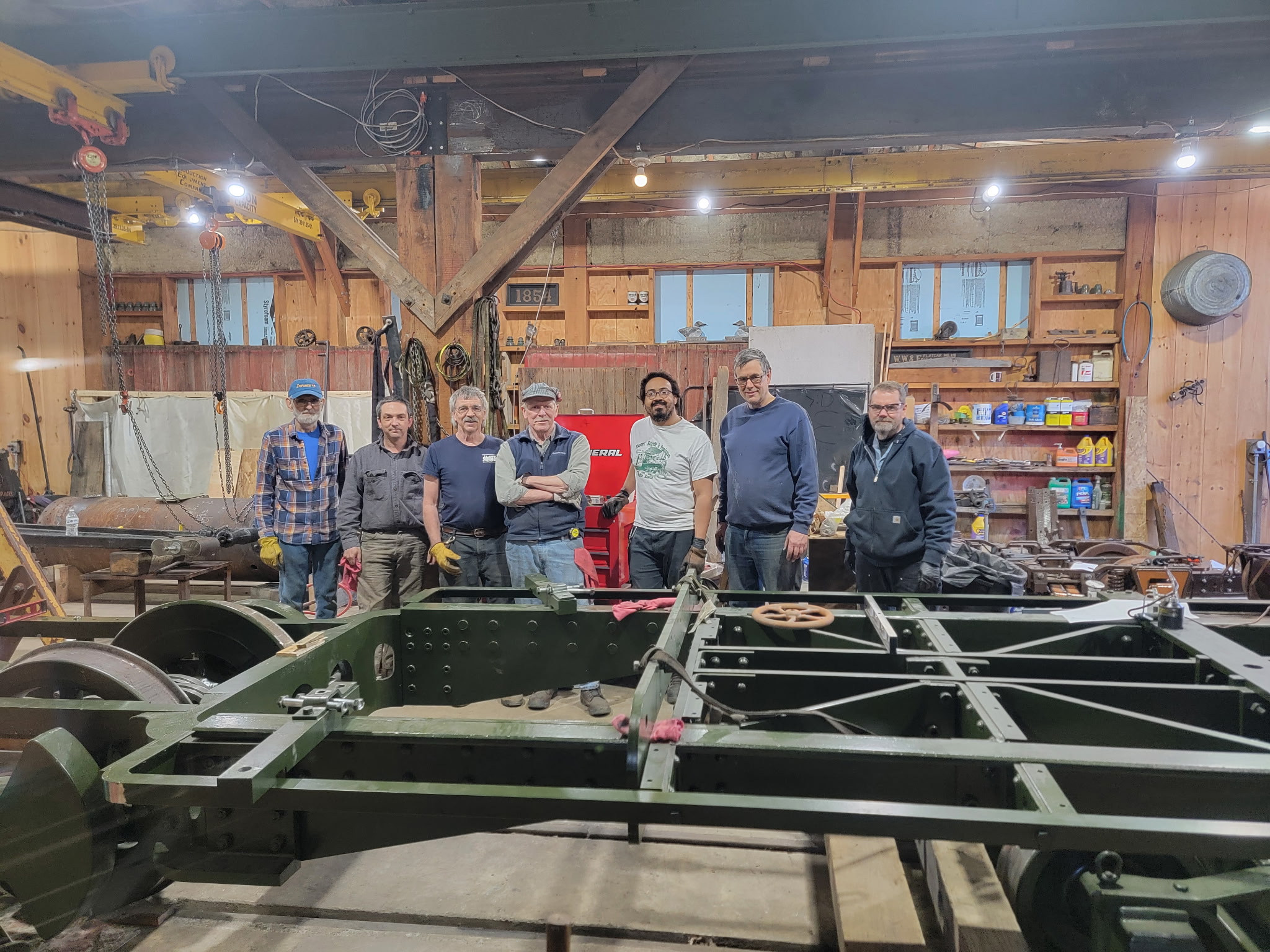
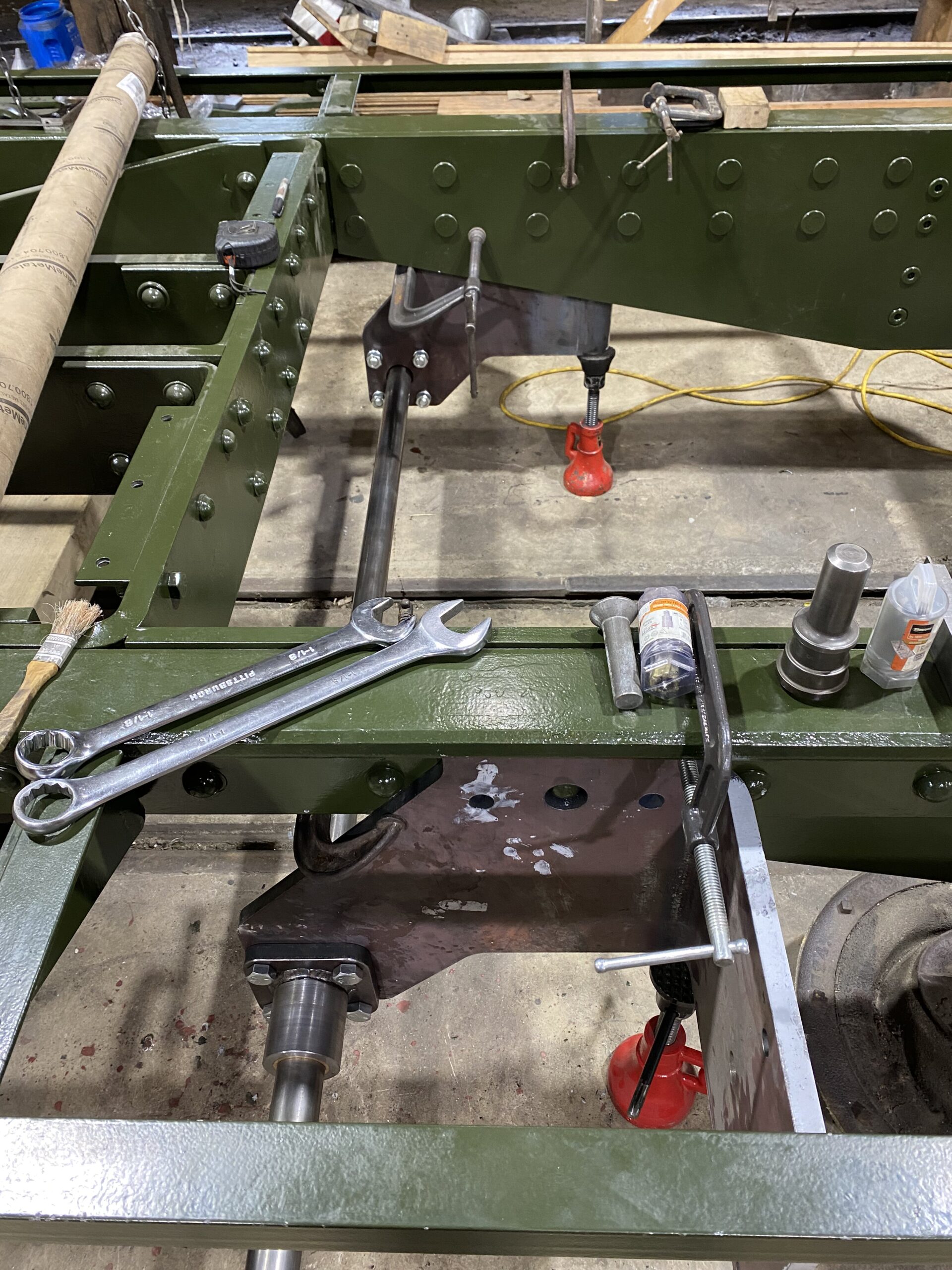
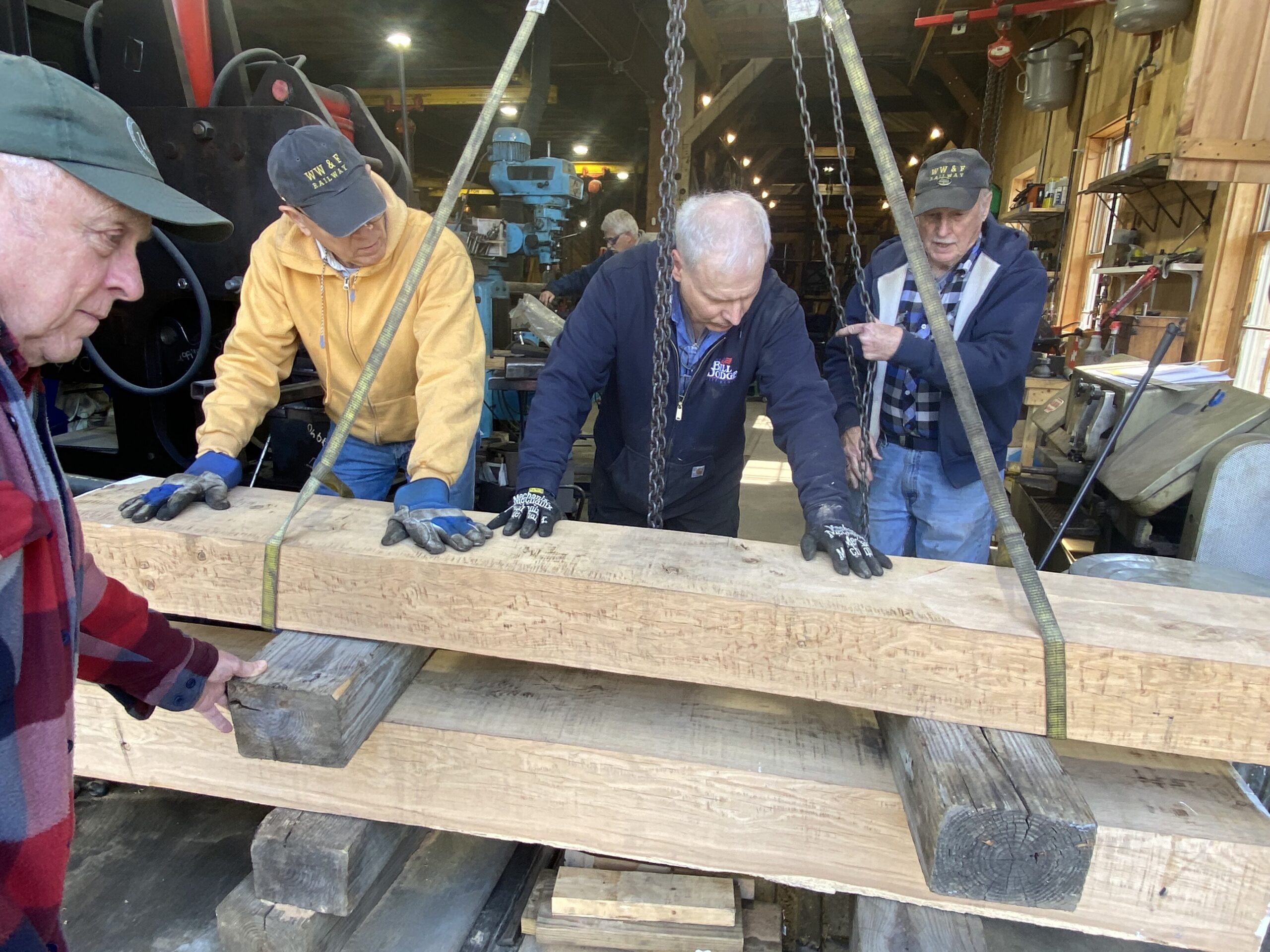
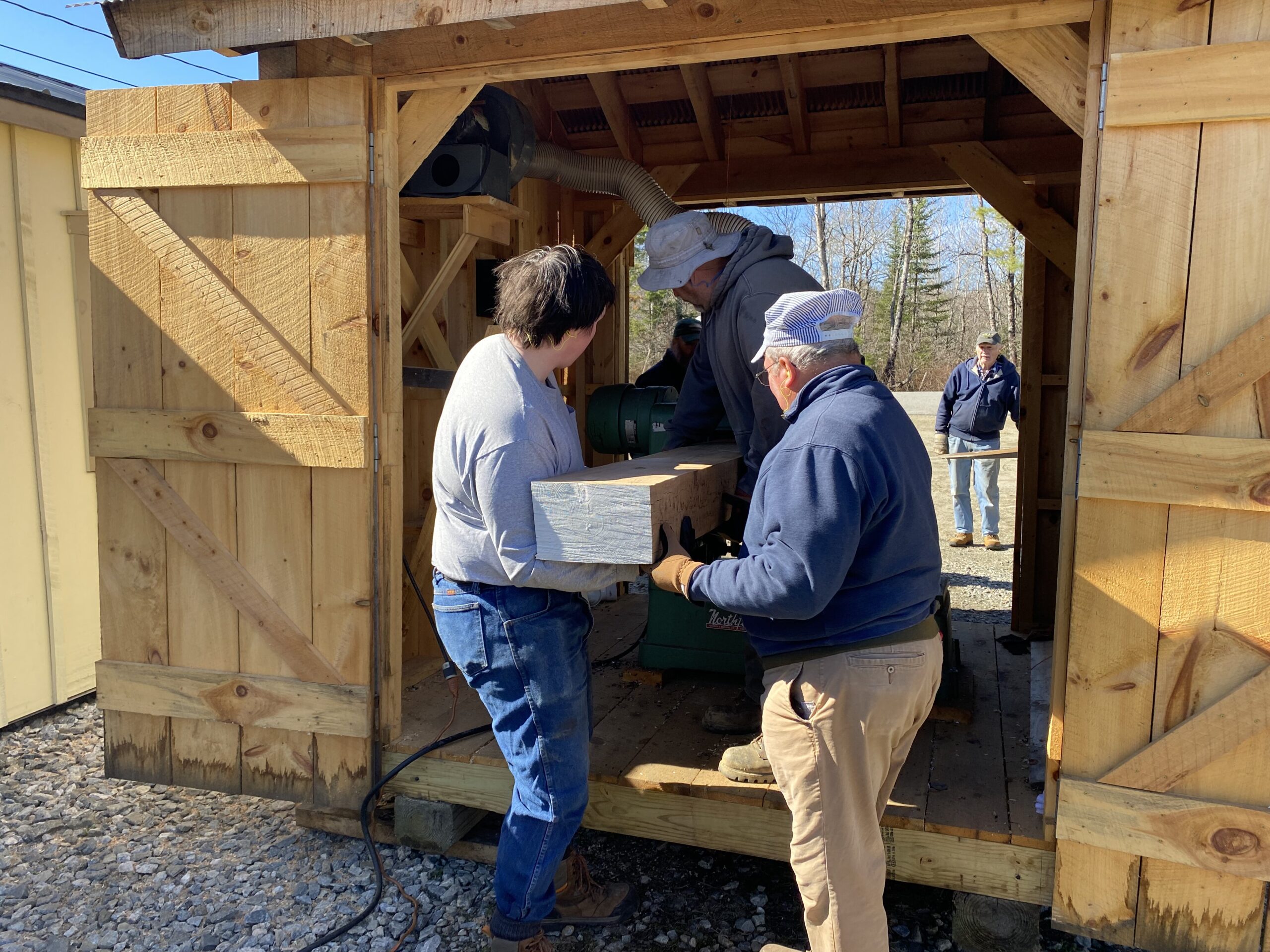
We are excited to report that #11’s frame has been lowered (between work sessions) with weight on the drivers and rear truck. When we are able to assemble the suspension system, we’ll have weight on the leading truck as well. This photo was taken on April 14.Gordon Cook and Rick Sisson located the locomotive brake brackets on the rear frame. We were able to match drill these to the frame using Bob Longo’s short magnetic base drill. Joe Monty pressed the brake tumbling shaft bearings into the hubs. Quentin Bethune machined threaded holes for grease fittings. Gordon bolted the hubs to the brackets and test fit the tumbling shaft in the bearings.Gordon and Rick hung our squeeze riveter in place to evaluate our ability to install 4 rivets connecting each bracket with the frame. In order to clear the frame rail, which is a 4” by 8” angle, Gordon will machine a new sleeve to fit in the riveter.Marcel Levesque, assisted by Jeff Shumaker and Fred Clark prepared our end beam material by sawing excess material from one face of each beam.The following day Brendan Barry and Marcel planed the beams, assisted by other participants during the Spring Work Weekend.
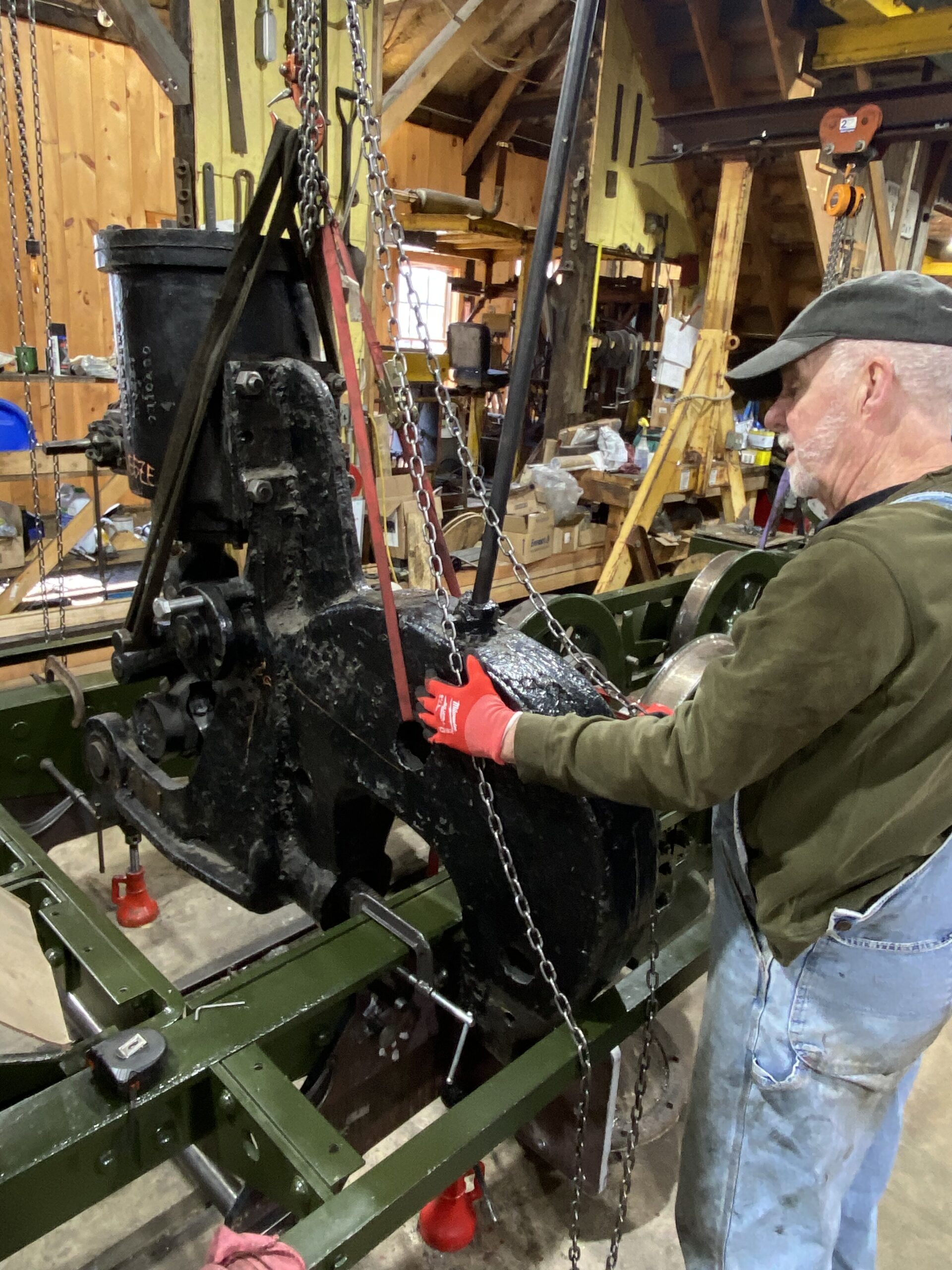
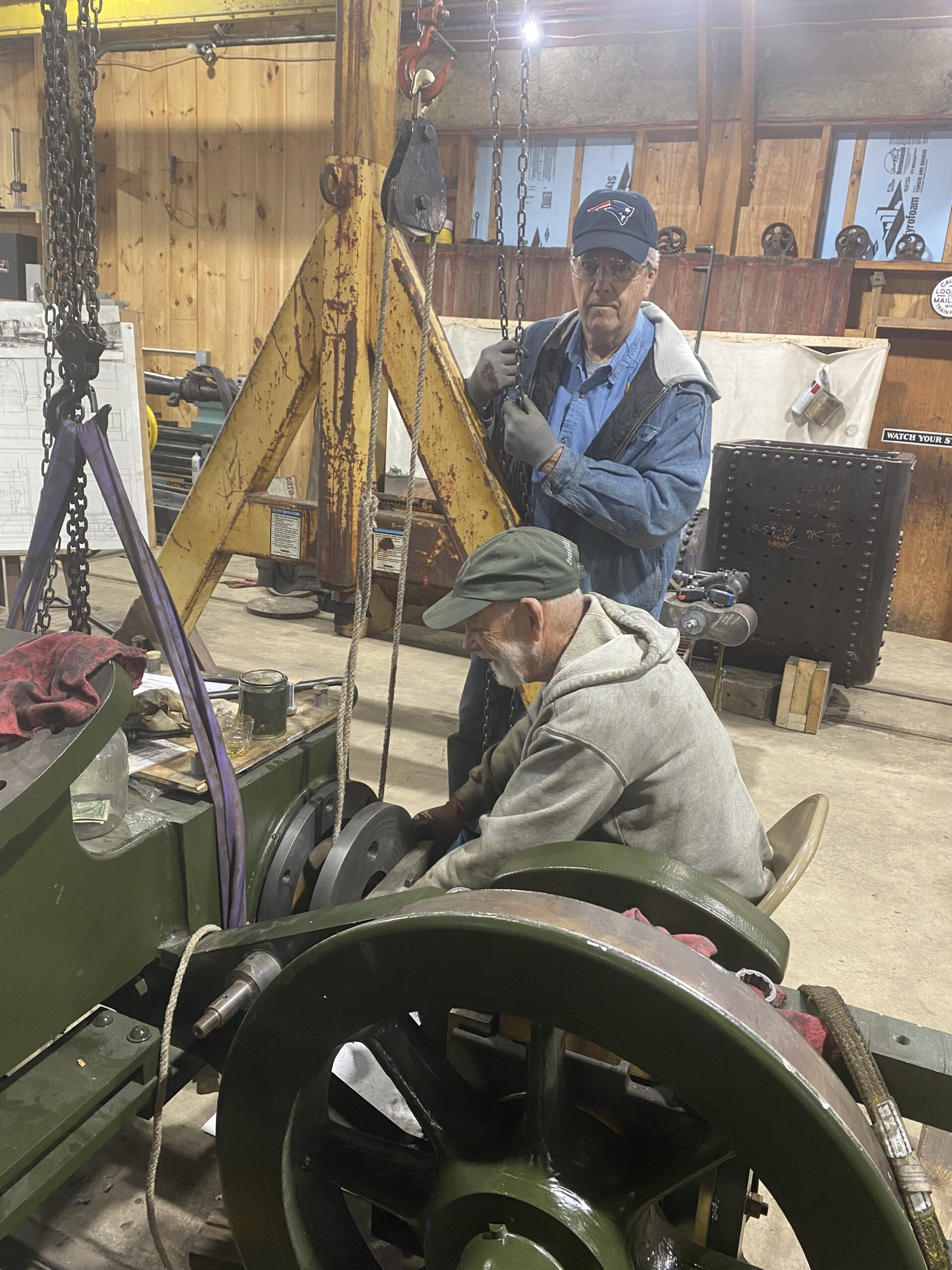
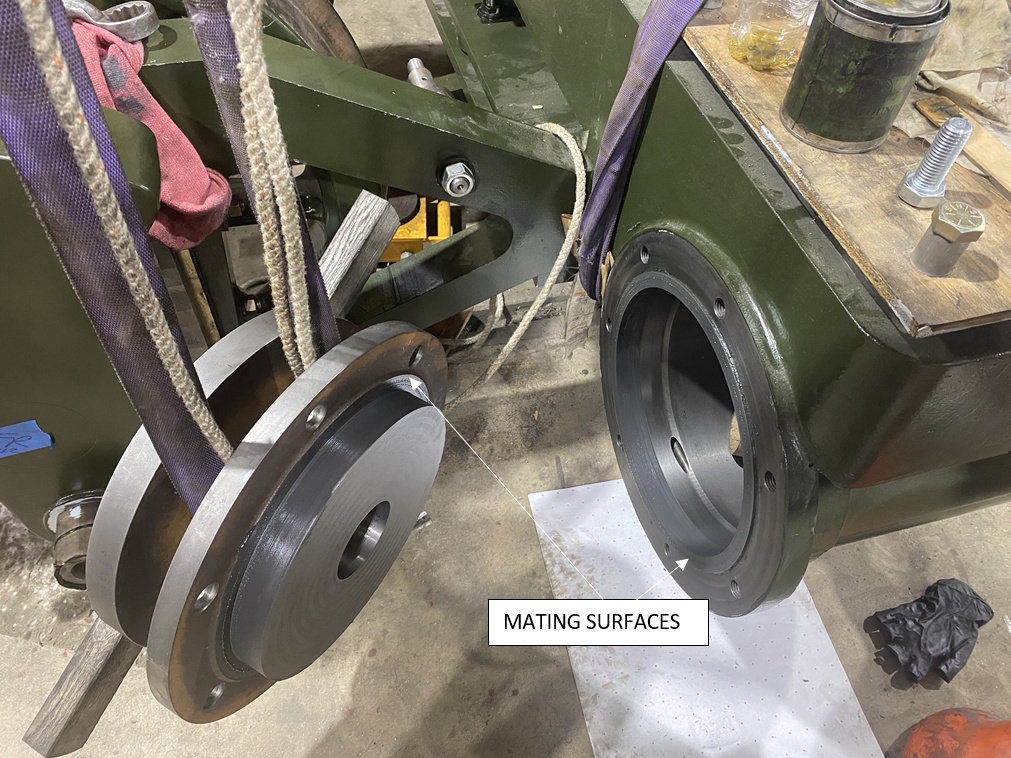
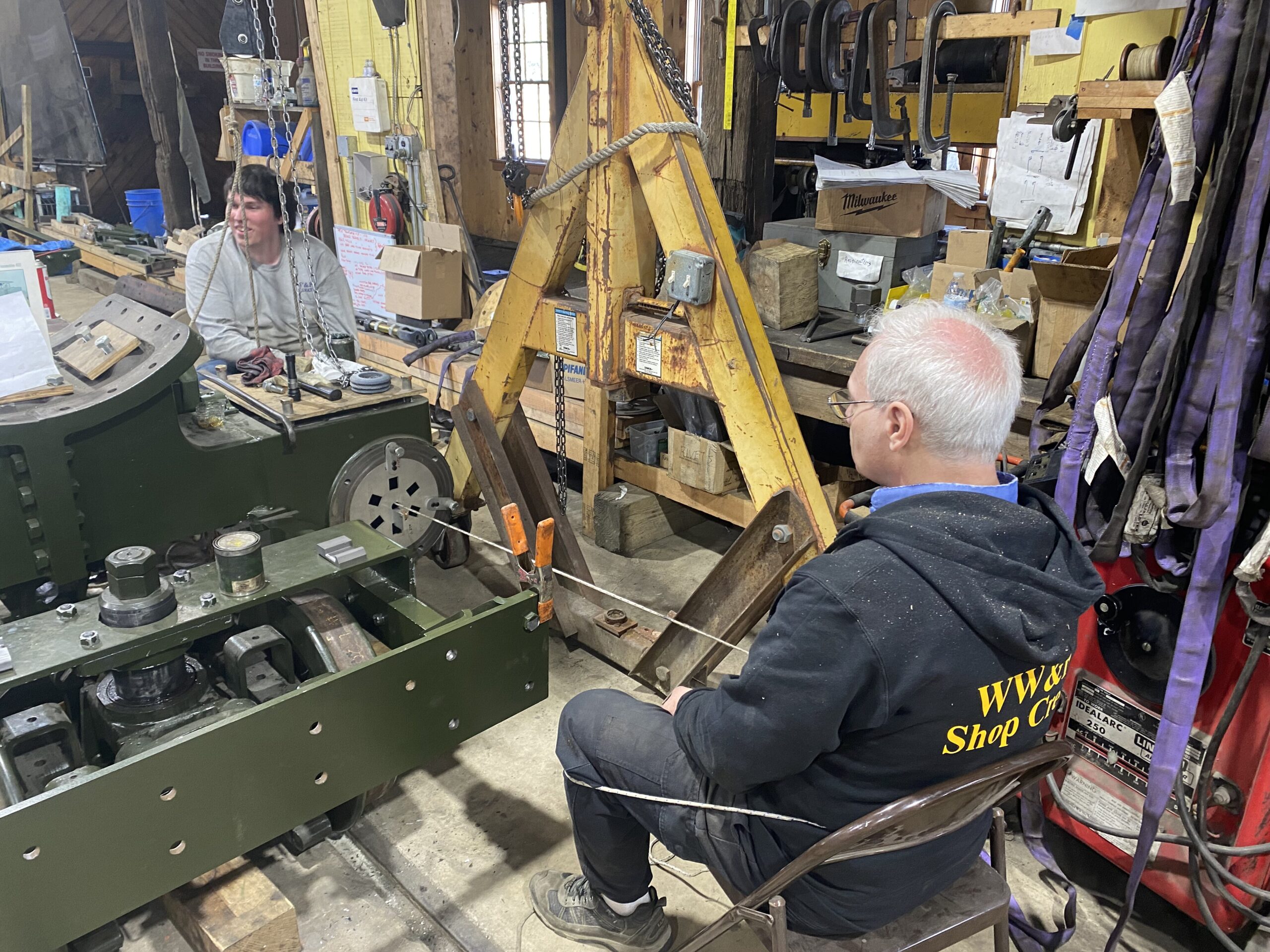
Gordon and Rick also started to lap one of the rear cylinder heads. Lapping refers to a machining process using a very fine abrasive to polish mating surfaces. This is a tedious process complicated by the sheer weight of the cylinder head. This effort entails applying lapping compound to the seating faces and rotating the cylinder head back and forth approximately 90 degrees for roughly 40 stokes repeated 4 times for one complete revolution of the head. We then clean the residual lapping compound and inspect the surfaces until we are satisfied with the finish. Rick and Bill Steussy finished lapping the rear cylinder head and right side cylinder. This took us 12 rounds to complete. Rick, Joseph Gilbert, Marcel and Kevin Kierstead tackled the left side cylinder, which took us 15 rounds to complete.
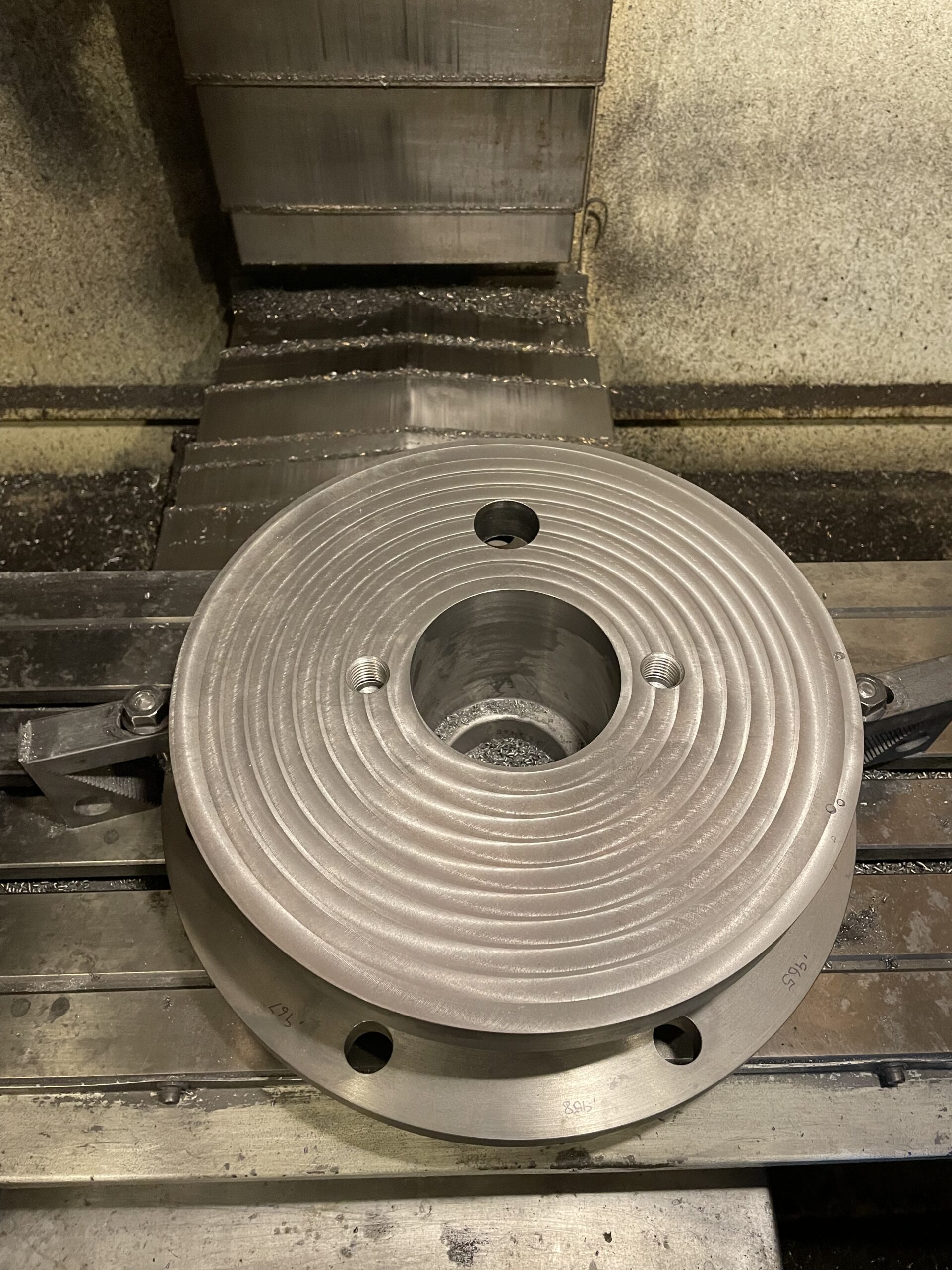
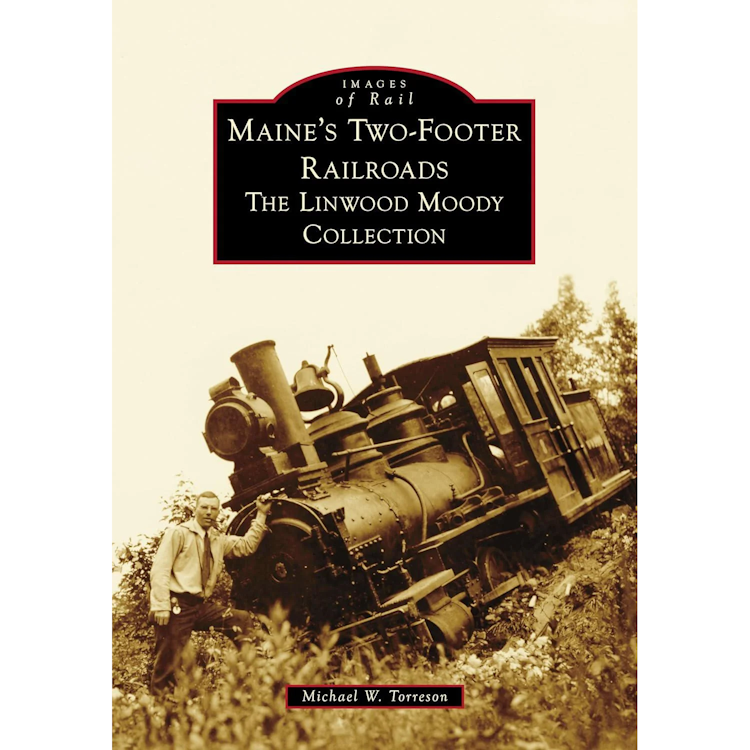
Here is a photo of one of the rear cylinder heads being machined by Noah MacAdam.Here Bill and Rick are lapping the cylinder head.This photo shows the mating surfaces.When we started on the second cylinder head, Joseph Gilbert and Marcel assisted. Joseph provided the muscle power and Marcel is shown applying tension to pull the cylinder head against the cylinder. This was a great improvement to our process.Mike Torreson has donated 200 autographed copies of his book “Maine’s Two-Footer Railroads: The Linwood Moody Collection” to the WW&F Ry gift shop as a fundraiser for #11. Mike writes “it is like travelling with Linwood on some of his travels in the 1930s to photograph and explore the WW&F, SR&RL and Monson RR. 100% of the proceeds will be used to accelerate #11 construction.
Our 2026 fundraising is showing some signs of stalling with $33,455.50 raised as we near the halfway mark. Remember, every dollar donated will be MATCHED by an anonymous donor (up to $60,000) and will help us keep construction of the locomotive “Pushing Forward”.